
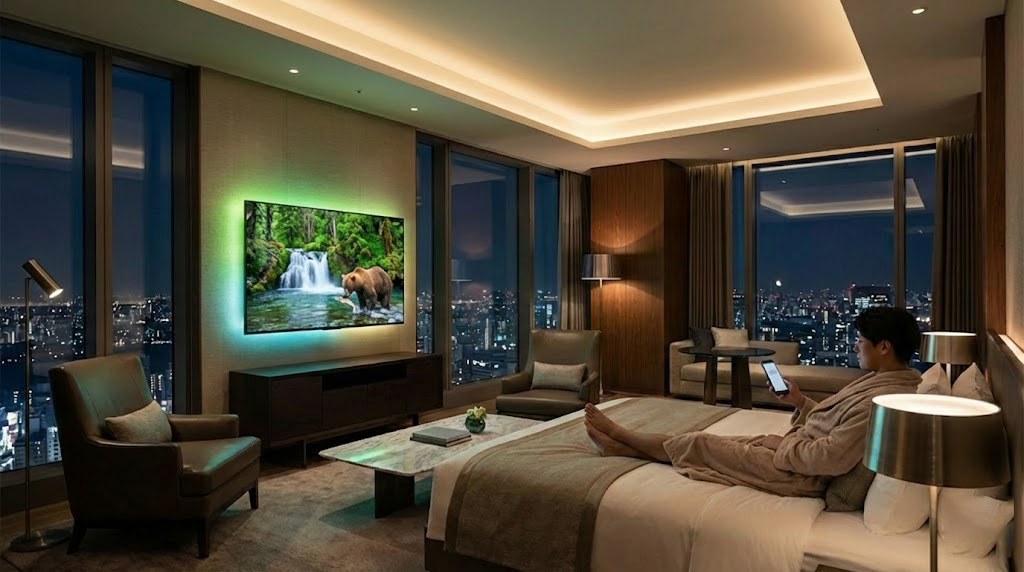
Peak season exposes technology weaknesses that remain hidden during low occupancy. Systems that appear stable when a hotel is half full often struggle when every room is occupied and guest expectations are higher.
One of the most overlooked risks is tv casting for hotels.
Guests now expect to stream their own content on the in-room TV as easily as they do at home. During peak season, this expectation turns into pressure. Streaming demand rises, support teams are stretched, and small design flaws quickly become visible problems.
Many hotel TV casting setups were never designed for shared hospitality environments. They are often adapted from consumer or residential models that assume one household, not hundreds of rooms.
At low occupancy, issues appear manageable. During peak season, they multiply.
Common problems include TVs appearing in the wrong room, guest accounts remaining logged in after checkout, and devices failing to connect. Guests hesitate to sign in because they are unsure if their data is safe. Front desk and IT teams spend time resetting TVs and handling complaints that should not exist.
What feels like an inconvenience at 60 percent occupancy becomes a recurring operational issue at 90 percent.
When TV casting fails, the impact goes beyond the TV.
Guests disengage from the in-room experience. They bypass the TV entirely. Frustration shows up in reviews and post-stay feedback. Staff time is diverted from service delivery to troubleshooting.
Privacy risk also increases. A single incident involving leftover credentials or cross-room access can damage guest trust at the worst possible time of year.
Peak season is when hotels protect revenue and reputation. Unreliable TV casting puts both at risk.
TV casting should not be treated as a standalone feature. It is part of the core in-room experience and must operate reliably under full occupancy.
A hospitality-grade approach to tv casting for hotels is designed for scale and shared environments. Each casting session is tied to a specific room. Guest devices are isolated from one another. Personal data is cleared automatically at checkout. Guests never need to enter credentials on hotel devices.
When casting is designed this way, it remains stable even when demand peaks. Operations stay predictable. Guest confidence is preserved.
Hotels that address TV casting as part of their core technology stack see clear results during high-demand periods.
Support tickets decrease.
Front desk and IT workload is reduced.
Guest satisfaction scores improve.
Negative reviews related to in-room technology decline.
Repeat booking intent is protected.
Instead of becoming a pressure point, the in-room TV supports the overall guest experience when it matters most.
ANTlabs delivers tv casting for hotels as part of a unified guest experience and hospitality infrastructure platform.
ANTlabsEzCast operates alongside hotel high-speed internet access and hotel IPTV systems under one integrated control layer. This reduces complexity, limits failure points, and ensures consistent performance across every room and property, even during peak season.
For hotels preparing for high occupancy, TV casting should not be left to chance. It should be designed to scale with demand and protect both operations and guest trust.
More info: https://hospitality.antlabs.com/products/in-room-casting/
Enquiry: https://hospitality.antlabs.com/enquiry
#ANTlabs #ANTlabsHospitality #HotelCasting #TVcastingForHotels #HotelIPTV #HotelTechnology #PeakSeasonReady #GuestExperience #HotelOperations