
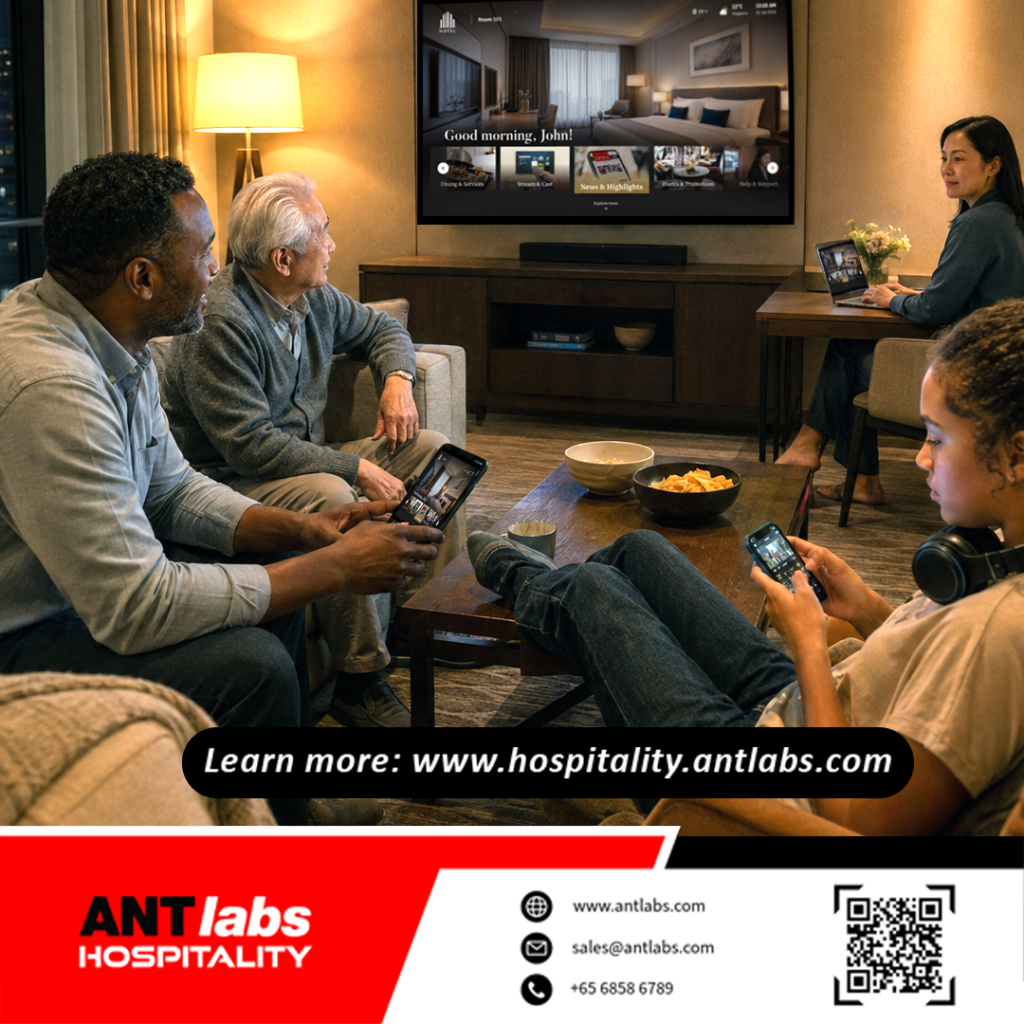
A guest returns to the room after a long day, opens Netflix or YouTube, and decides the big screen is the right place for a Spider-Man rewatch. To the guest, the request is simple: scan, cast, and relax. They should not need spider sense to guess which TV belongs to the room, and they should not have to wonder if another guest account is hiding on the screen.
That small entertainment moment now carries more weight than hotels sometimes realize. Guests arrive with their own streaming habits, playlists, watchlists, and paused episodes. The phone, tablet, or laptop already knows what they want to watch. The room for TV only needs to make that content feel easy, private, and comfortable on a larger screen.
The 2020 Guest Room Entertainment Survey found that 71% of guests would rather cast content from their own device than use a hotel video-on-demand menu, while 89% of hoteliers agreed that guests want this capability. For hotel owners, casting has become part of the room experience. For IT managers, it has become part of the guest network, privacy model, checkout process, and support environment.
A hotel casting solution therefore must do more than display video. It must connect the right guest to the right screen, keep personal credentials on the guest’s own device, clear access when the stay ends, and keep streaming traffic under control when many rooms are occupied. That is where the purpose-built advantage becomes visible.
Consumer Casting Brings Living-Room Assumptions into a Shared Building
Consumer casting works well at home because the environment is simple. The TV belongs to one household, the network is trusted, and the same people use the same devices repeatedly. If something goes wrong, someone in the house can reset it, rename it, or sign it out.
The hotel room works differently. One guest may use the TV tonight, another may check in tomorrow, and a family with several devices may occupy the room over the weekend. Across the property, hundreds of unrelated guests share infrastructure while streaming, browsing, messaging, working, and connecting multiple devices at the same time.
That is why a consumer casting stick can look attractive in a small test but become difficult across a full deployment. Guests may see multiple TVs on the network, choose the wrong screen, hesitate because the TV names are unclear, or accidentally cast to another room. Others may be asked to sign in directly on shared equipment, then forget to log out before checkout.
What looks like a quick room upgrade can become a privacy concern, a network issue, and a room-level operating problem. The device was built for a living room. The hotel needs a system built for guest turnover, shared infrastructure, and managed service delivery.
Secure Casting Starts with the Right Room TV
The first requirement is simple: each guest should connect only to the TV in their own room.
When guests can see a shared list of visible TVs, casting becomes confusing. A guest may not know whether “Room TV,” “Chromecast 203,” or “Guest TV 2” belongs to their room. For the guest, this is frustrating. For the hotel, it creates the risk of wrong-room casting and unnecessary calls to the front desk.
ANTlabsEzCast avoids shared-device-list problems with room-specific access. The guest scans the QR code or uses the TV code for the room, connects to the assigned screen, and casts supported content without searching through a crowded list of visible devices.
This is the practical meaning of hotel TV casting without pairing through exposed consumer-style discovery. The guest gets a simple scan-and-cast experience, while the hotel keeps the casting session tied to the correct room.
Guest Accounts Should Stay on Guest Devices
A shared hotel TV should not become a place where guest streaming accounts are stored. When guests sign in directly on a TV, set-top box, or consumer casting device, the hotel must depend on the guest remembering to log out or on staff catching the issue before the next arrival.
Some guests will avoid the feature because they do not want to enter personal credentials on hotel equipment. Others may sign in, check out in a hurry, and leave behind an active Netflix, YouTube, Spotify, or other streaming session. The next guest only needs to see someone else’s account on the screen to question how carefully the room of technology is managed.
ANTlabsEzCast keeps personal streaming credentials on the guest’s own device. The guest uses QR-based access or browser authentication to connect to the in-room TV, while the hotel equipment does not store the guest’s streaming login. The cleanest credential risk is the one the hotel does not collect, store, or remove later.
For hotel owners and GMs, this protects guest trust. For IT managers, it removes a category of account-handling risk from the room for technology environment.
Checkout Should Clear the Digital Room
A hotel room is expected to feel clean and reset for every arrival. The same principle should apply to the TV experience, especially when casting touches personal accounts, viewing history, and guest preferences.
With PMS integration, ANTlabsEzCast can tie casting access to the guest’s stay. The guest receives access to the correct room for TV during the stay, and session data can be cleared automatically at checkout. The next guest starts with a clean casting session instead of inheriting whatever the previous occupant left behind.
No one should need Doctor Strange to cast the Runes of Kof-Kol just to make the TV forget the previous guest. Guest credentials, session data, and room access should be cleared automatically as part of checkout, without relying on the guest, housekeeping, or IT to catch it manually.
Consumer casting devices do not understand the hotel’s stay lifecycle. They do not know when a reservation ends, when a guest changes rooms, or when a screen should be cleared for the next arrival. A purpose-built hotel casting solution follows the same check-in and checkout rhythm as the property.
Streaming Has to Behave on the Guest Network
Casting traffic still uses the hotel’s guest connectivity environment. When many guests stream at the same time, casting must coexist with browsing, messaging, work calls, mobile devices, and other digital services.
Some simple casting approaches rely on open device discovery, or the TV’s own soft AP connection, which works like a separate hotspot. That can reduce visibility for the network team and make troubleshooting harder. When a guest says casting is slow or unstable, IT may need to check the TV, the guest device, the casting setup, and the guest Wi-Fi before finding the cause.
ANTlabsEzCast is designed to reduce unnecessary network noise compared with conventional casting approaches. When deployed with SG5 HSIA gateways, casting traffic can benefit from Advanced QoS, and traffic shaping designed for high-demand guest environments. The hotel keeps casting under the same visibility and performance controls used for the wider guest connectivity service.
That makes a real difference during peak occupancy. One room movie night should not become another guest’s slow Wi-Fi experience, and a casting rollout should not create a new blind spot in the network.
Central Management Keeps Rollouts Practical
A casting setup may work well in one room during testing. The real work begins when it must be monitored, configured, updated, reported on, and supported across many rooms or properties.
Room-by-room management becomes tiring when every screen behaves like a separate device. One room may need a reset; another may behave differently after an update, and another may require a manual check before the guest can use it properly. Across a single hotel, this creates inconsistency. Across a group, it becomes harder to standardize.
ANTlabsEzCast can be managed through ASP Cloud, giving hotel teams centralized control, configuration, and reporting across rooms and properties. IT teams can manage casting as part of the broader hospitality platform instead of treating every TV or casting device as a separate item to check manually.
A centralized approach also supports future growth. New rooms, renovated floors, and additional properties can follow a consistent casting setup instead of creating different behaviors from one location to another.
Casting Should Fit the Room Technology Already in Place
Hotels rarely upgrade every TV, set-top box, gateway, and room device at the same time. Some properties may already have compatible TVs; others may depend on set-top boxes, and some may modernize room entertainment as part of a later renovation phase.
ANTlabsEzCast supports multiple Chromecast generations, Android TV OS, ANTlabsEzTV STB, and selected hospitality TVs. That gives hotels a more flexible path to improve in-room casting without forcing unnecessary replacement of existing room technology.
Per-cast target licensing also keeps the deployment model clearer as the property grows. Hotels can plan casting around actual cast targets and rollout priorities, whether the project starts with one property or expands across a wider portfolio.
For hotel groups, this flexibility matters because every property may not be on the same upgrade timeline. The platform should support a consistent guest experience while allowing each property to move through its own practical path.
Purpose-Built Casting Protects the Guest Experience at Scale
The best casting experience feels simple because the hotel has already handled the complicated parts. The guest scans, connects, presses play, and enjoys the bigger screen. Behind that moment, the hotel has mapped the guest to the correct room TV, kept credentials on the guest device, cleared the session at checkout, managed streaming traffic, and kept the deployment visible from one platform.
This is where secure hotel TV casting becomes both a guest-experience decision and an infrastructure decision. The owner sees a more modern in-room entertainment experience that supports satisfaction, reviews, and repeat stays. The IT team sees a service that can be managed, monitored, and scaled without turning every room into a separate workaround.
A generic casting device can display a video. A purpose-built hotel casting solution must be more. It protects guest privacy, respects the shared network, fits real hotel operations, and keeps the experience clean from check-in to checkout.
When the guest presses play, the hotel’s casting setup should already know the room, protect the session, and clear access when the stay ends. No wrong-room casting, no leftover accounts, no messy device list, and no need for a sling ring to open a portal to the right screen. Just the right guest, the right screen, and a clean session that disappears at checkout.
ANTlabsEzCast gives guests the familiar casting experience they expect while giving hotels the room-level control, session privacy, network visibility, and centralized management needed to operate casting properly at scale.
Talk to our team to build your secure, scalable hospitality platform today.
https://hospitality.antlabs.com/enquiry
#ANTlabs #ANTlabsEzCast #HospitalityTech #HotelIT #GuestExperience #HotelCasting #SecureCasting #InRoomEntertainment