
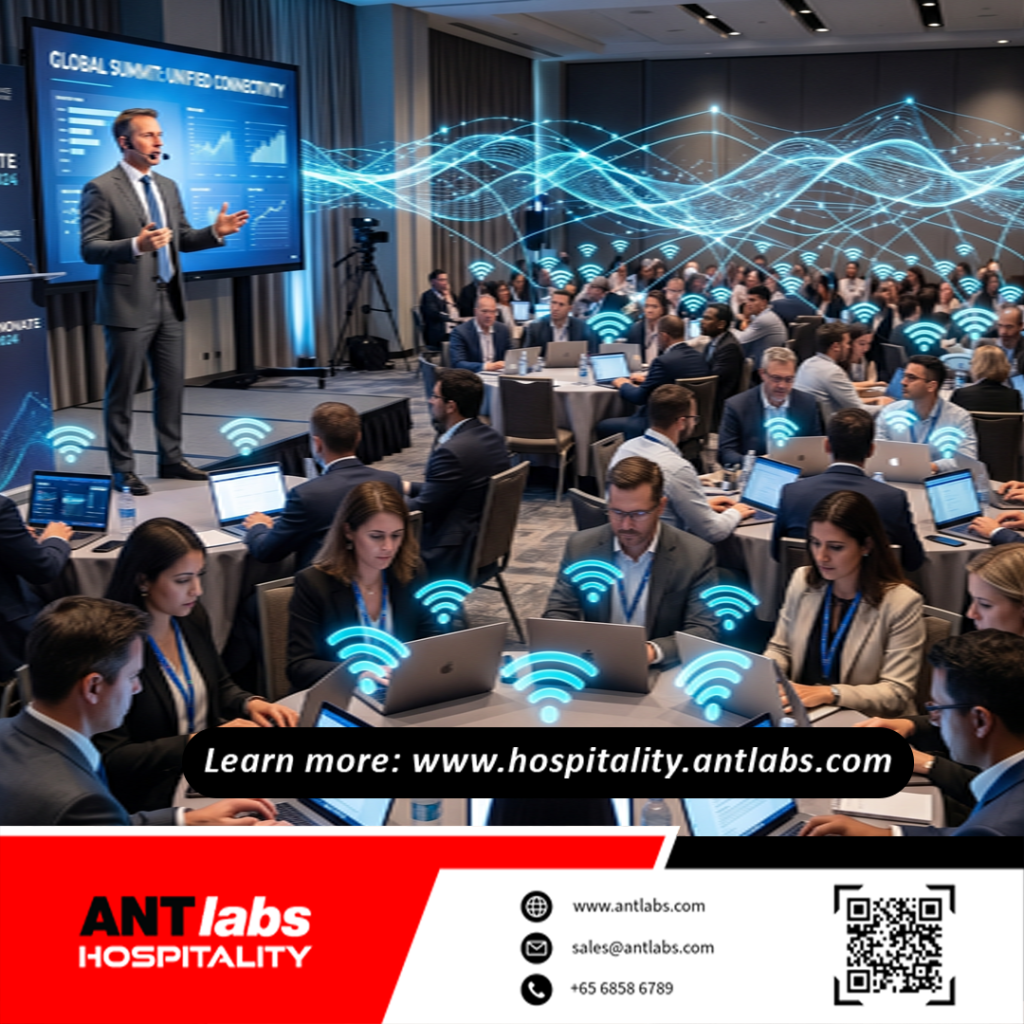
Delivering exceptional hotel high-speed internet access is no longer defined by speed metrics alone. In today’s demanding hospitality environment, “high-speed” means a network can reliably support hundreds or thousands of guest devices, staff systems, smart hotel platforms, and business-critical operations without becoming unstable during peak demand. When guests connect to a property network, they expect flawless, uninterrupted connectivity across all their personal and business devices. Delivering that experience requires intelligent distribution and user-aware management, ensuring every guest receives seamless performance no matter how heavily the network is being used.
Establishing true enterprise-grade connectivity requires infrastructure that can identify and adapt to individual user needs. The ASP Cloud solution allows service providers to deliver fast, secure, user-aware services to users across multiple locations. These personalized and differentiated services are created according to each user’s preferences or usage context within the network. By deploying targeted services, operators can deliver a stronger digital experience that builds guest loyalty and reduces IT complaints.
Modern hotel environments must support a high density of connected devices far beyond basic guest browsing. Each room may have multiple devices, including smartphones, laptops, tablets, streaming devices, wearables, and even IoT-enabled room systems. Public areas, meeting spaces, restaurants, back-office systems, and staff operations all add simultaneous demand to the same infrastructure. This is where many traditional and fragmented network deployments begin to struggle under heavy traffic. A connection may look fast on paper, but inconsistent authentication, uneven bandwidth allocation, weak traffic control, or fragmented infrastructure can quickly create performance bottlenecks that guests notice.
Overcoming these congestion challenges requires sophisticated traffic management tools built for high-density environments. Advanced features such as departed device detection and automatic logout of inactive users prevent dormant connections from draining critical bandwidth. IT administrators can apply bandwidth rate limits per device or per account to ensure fair distribution across the property. The system also allows operators to prioritize bandwidth quality of service (QoS) for premium users, using VIP recognition to protect the experience of their most valuable guests. In hospitality, speed without stability is practically useless because guests do not care how much bandwidth a property has purchased if their video calls drop unexpectedly.
Designing scalable hotel high-speed internet access means engineering infrastructure for long-term growth and agility. A property may start with today’s standard guest expectations, but tomorrow’s demand will include more connected devices, heavier cloud applications, and greater automation across the hotel ecosystem. The network should not merely serve current occupancy levels; it should scale as demand grows. For instance, enterprise-grade hardware such as the Pro 5410 gateway can support a maximum user license capacity of up to 30,000, providing substantial capacity for convention centers or mega-resorts. For hotel owners, this operational scalability helps ensure infrastructure investments support long-term goals instead of becoming costly short-cycle replacements.
Adapting to fluctuating operational demands requires flexibility in software and license management. The centralized platform provides a low upfront investment cost as well as flexible allocation and redeployment of shared licenses and software assets to meet business requirements and user demand. If there is a sudden reduction in footfall at a property, operators can reduce license allocations and increase them again as business picks up. For IT teams, this scalability means fewer manual adjustments, fewer configuration issues, and reduced stranded licensing costs across the portfolio.
Managing high-speed internet becomes easier when the underlying platform is centralized, standardized, and manageable remotely. Hotels need infrastructure that allows IT teams to manage access, authentication, configuration, monitoring, and policy enforcement without relying on fragmented site-by-site troubleshooting. This is where a unified platform featuring ASP Cloud and SG5 edge equipment becomes strategically valuable for large-scale operations. The consolidated dashboard benefits a hotel group’s IT management team by giving them a clear view of the hotel network across multiple locations. ASP Cloud’s site duplication feature substantially reduces the time needed to customize and deploy hotspots and broadcast relevant information to guests, because these tasks can be completed remotely from one central location.
Harmonizing a fragmented network portfolio does not have to mean replacing all existing hardware investments. The versatile ANTlabs platform is vendor-agnostic, meaning there are no brand- or vendor-specific limitations or major overhauls required if existing equipment works with the ANTlabs platform. ANTlabs has enhanced the cloud platform to support not only ANTlabs gateways but also other vendors’ network devices, including routers, gateways, and wireless controllers, to provide a consistent experience for end users. For IT management, this means better control and visibility across more aspects of the network service, along with the flexibility to customize the user experience according to local conditions. When the network works exceptionally well, it functions as the invisible link protecting operations; when it fails, it becomes the most visible crisis on the property.
A future-ready hotel connectivity platform must connect technical capability directly to operational and commercial value. Centralized access control offers a wide range of authentication methods, from property management systems to social media login, allowing guests to onboard seamlessly using the most convenient method for them. Hotel groups can maintain brand standards through ASP Cloud’s drag-and-drop portal designer tool: they can create one portal as a template and deploy it across locations worldwide. This standardized infrastructure approach makes multi-property operations easier to scale and reduces the burden on on-site personnel. Operators can also monetize their network by upselling premium-tier Wi-Fi services to lobby guests or by giving VIPs and loyalty cardholders the best possible tier.
Protecting a brand’s digital reputation hinges on maximizing uptime and minimizing the impact of unforeseen hardware failures. The architecture provides high availability and seamless cloud backups to improve operational resilience. It also enables faster service restoration by transferring licenses seamlessly across equipment. If a location reports a critical network issue, a hotel group administrator can replace faulty equipment with a spare inventory, helping minimize disruption. Hotel high-speed internet access should therefore be evaluated as a foundational strategic infrastructure rather than a simple IT utility.
The future of hospitality connectivity depends on automated efficiency and predictive reliability. The ecosystem enables fast deployment of secure Wi-Fi hotspots and user-aware services while requiring fewer human resources and improving administrative efficiency through the platform’s multi-level administrative functions. Maintaining a competitive edge in the highly competitive modern hospitality landscape requires an infrastructure strategy that anticipates future connectivity needs. Upgrading to an intelligent, centralized management platform is an effective way to ensure the network handles exponential device growth while protecting the brand’s operational reputation. It represents the evolution from chaotic manual troubleshooting to predictable operational automation, delivering the invisible link that guests never see but always depend on.
Talk to our team about building your scalable hospitality platform today.
https://hospitality.antlabs.com/enquiry
#ANTlabs #HospitalityTech #HotelIT #GuestExperience #HotelConnectivity #FutureProofWiFi #NetworkInfrastructure